Thursday, 9 February 2023


Hello Everyone!

Finally, I have retrieved access to the email account that accesses my farm blog.  An entire year to catch up on.

First of all, we hope that your holidays and start to the new year are as good as Cayley's Christmas present.

Aside from the usual holiday goings on, I found time to read a book about the year 1816 - the year without a summer.  Made the past couple of years seem like a walk in the field...


Here is our first growing field in early autumn.  Most of the beds by then had cover crops on them, in preparation for the 2023 season.  On the right hand side of the field, you can see the straw covering the planted garlic bulbs and a row cover over the chard.

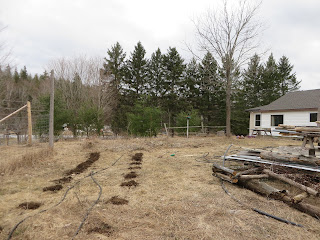
Big difference from the past two years, when this field looked more like the new field of beds that were worked up this year.


Next year's country:  Last fall I had another square of pasture plowed up, and planted a cover crop this season to break-up and feed the soil.  

In mid summer, I scythed off the buckwheat flower heads after giving the bees a chance to collect some nectar - they really like buckwheat but we don't care for the flavour of buckwheat honeyso we don't give them too much.

Mid autumn, I sent the mower over the field three times over a period of weeks, each time cutting progresively lower.  This helped mulch up the leaf cover and make it easier to work into the soil.


The next step was to survey the beds, go over them with the broadfork, apply the amendments (compost, greensand, ash), and work them in.  These will provide kidney beans, squash, potatoes, carrots, kale, and some other brassicas next season.


This sounds like a lot of work (becauase it is) but I have some help with various tasks from time to time.  Our resident porcupine cleans up rotten crab apples.  


This winter, help arrived in the form of a Lesser Weasel.  It has gone through the local squirrel (and presumably mice) population like a scythe.  

I suspect Cayley feels like her larder is being raided, but for me, it heralds a season with less rodent damage.


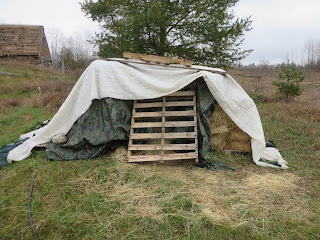
Nonetheless, I have built a hay crib far from the trees where the squirrels hide the black walnuts.  When my hay was stored in the shed (near the trees), the rodents would store and or eat walnuts in  the hay and leave shells and rind all through the hay.  This hay is to be used in the growing beds as mulch and as bedding for the chickens, which in turn is sent to the compost.

Black walnuts have a residue that stunts the growth of plants, including many of the vegetables we grow.


So I took some salvaged wood, rejected fece posts, and old metal roofing panels from when we had our house roof replaced.  It looks nicer without the tarps, but those help keep the snow from blowing in.  


Most of the new nursery was also built with found or re-purposed materials.  I'll be starting my onions in the next couple of weeks in here.  Nice to have a little more elbow room than the temporary nursery we had in the hexagon.

Thanks to Gord for helping with the wall rasing.  The walls are extra heavy as I built them a little thicker to contain the insulation.

The only damage we took from the deracho was having the nursery door wrenched off it's hinges, but a quick repair fixed that.  


The other structure I built this season was the farm gate store.  

An 8x10 rodent proof structure, with two doors at the front to access shelves of produce, and a rear door on the other side of the fence to allow entry  for stocking, storing packaging and delivery totes, and our market tent.  

Since this photo, I've started to put on the cladding to make the bulding a litle more attractive.


The other big building project was fencing the remaining 4 acres of land.  Parts of it were quite tricky as they passed through an area covered in poison ivy.  After using the auger to drill the post holes (with help from Julia and Matt - thanks to both of you), I had to evacuate the remaining soil in the hole.  

Then the posts went in, the fencing leaned against the posts, and the fence tightening tool attached to the back of the car...


This is a traditional technique that I learned from Dick at the Stittsville farm.  

Bolt a pair of two by fours to the end of the fence, ensure the corner posts are strongly braced, tie a rope onto the two pieces of wood, and then attach the rope to the trailer hitch using a hook.

Advance the car in low gear, stopping every few inches to test how tight the fence is.  When the page fencing is tight as a piano wire, stop the car with the parking brake (otherwise the car rolls back slightly) and proceed to fasten the fecne to the posts.


After that, a line of eletric fencing, a grounded line of high tensile steel, and then a more visible line of old eletric tape fencing at the very top to dissuade deer from even thinking of jumping over to get at the bounty within...


Our self seeding hay field (the dark green rectangle between the pines and fence line, middle) would be one such treat the deer would like all too much.  

This is mid season, when the hay is perfect for cutting and baling for winter forage.

Last year, I let everything go to seed (orchard grass, oats, and red clover).  Next season, I'll be adding amaranth, spelt, and a nitrogen fixing crop different from clover.  

This will ensure we always have a store of forage and bedding for our livestock, and mulch for the  vegetable field. 


For a variety of reasons, growth for much of the season was disapointing.  By the end of the year, research and tenacity paid off and here is one of the results - heads of lettuce weighing over a pound.  

I'm sure there are gardeners and farms that can do this regularly, but this is probably the best lettuce I have ever produced so I'll take a moment to gloat.

I'll delve into our growing challenges in future posts with moredetails.  It was an interesting (and very frustrating) learning curve.


As the season drew to a close, I took some time to do an experiment.  We have a lot of pine trees on the property, and these need regular pruning to keep eletric lines , laneways, and paths clear.  

Traditionally, pine boughs were used as frost protection for plants such as lettuce.  

The mini heads of lettuce survived two heavy frosts before succumbing.  

It was a good way to use some lettuce heads that were sown a little too late to size up.  


As we go into this season, we continue to plan for the future.  Here is one of two pear trees we planted last spring.

There used to be a couple of pear trees here, but until this year, there was only one remaining.  These trees need at least two individuals to pollinate the flowers and grow fruit.

If at least one of these survive, we can have some pears in the not too distant future.


One discovery for this year were the morrels in the yard just outside the kitchen door.  Very convienient.

Something from the near furture (a brief period days in the spring) to look forward to.  


This is the first update of this blog I have been able to do for almost a year.  

Other pages will need a lot of updating.  Please be patient.  I'm on it...

'Til then, Bob


Monday, 7 February 2022

History never happens all at once.  

We all have common concerns.  We learn about these common concerns by listening to one another.  According to the folks interviewed by Amanda Ripley, author of "High Conflict", one of the most effective ways to get people to sit, speak with and listen to one another, is over food...


We still have honey avaiallble!  Contact us if you are interested...


Here we are, a new year and a brand new fresh start!  Let the boring twenties continue...


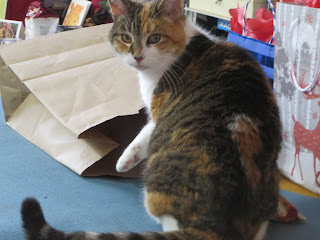
Here is Cayley moments after fishing her Christmas present out of a brown paper bag.  

Barely visible to her right, is her toy filled with fresh catnip.  Exactly what she wants to keep her preoccupied during the winter days when the snow beneath her paws is not to her liking.

Helps keep her off the computer when its getting more attention than she is.


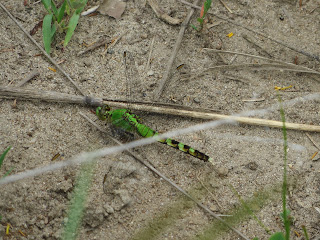
While perusing photos from last year, I came across this dragon fly.  It's unclear if this was taken in Lanark or in Stittsville.


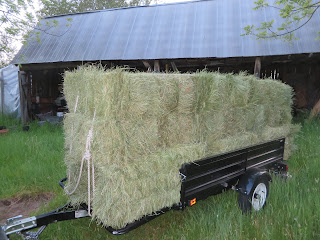
Our big farm investment this year was the trailer.  

Many tasks become quicker around here (and lighter), and we could not have moved everything from the old farm to the new one without it.


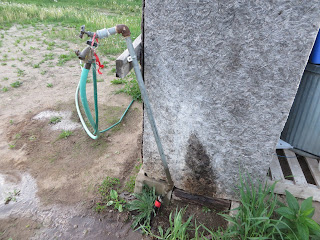
Many small tasks were completed, such as our leaky outdoor tap and pipe.


Julia started, and subsequesntly completed, building her first garden from scratch - a bed of very bee friendly flowers.  


In spite of all our progress, the field is not ready enough to provide for a full CSA next season.  It's a tough decision, the first time in over twelve seasons that I will not be selling a lot of vegetables.

One of the mistakes I made in our first year was to start before we had the farm on a firm foundation, and it reallly slowed down our growth for the first four years.  The old farm never really recovered and in the end, never achieved it's fullest potential.


There will be some produce in the middle of the year:  garlic, potatoes, carrots, a few green beans and whatever other crops we can fit in the curently prepared beds; as well as honey and (I'm not counting on them) maybe some mushrooms.


Sunday, 5 December 2021

Update as of December 9th:


We still have produce in stock for sale.  For our CSA and occasional customers in Kanata, Stittsville, and Ottawa, I will be making deliveries once during the weeks of the 13th, 20th, and 27th.

Exact dates to be determined by the weather, I try to keep my best eather days for work here at the farm.

For custoemrme in the Lanark and McDonalds Corners area, please contact us by phone or email (prefferrred) to order and arrange a pick up time.


For honey or pork, please see the honey and pork pages respectively.  For other produce, check the Farmgate Store page.

Supplies for most of our produce stock, and certain cuts of pork are limited, so contact us soon.

Our jars of award winning gold honey make great Christmas gifts!


Hello Everyone:

Withthe pork to arrive soon, activity continues to ramp up here at Whitsend.  Even as the first snow flies, there are tasks to be seen to.  No time for winter reading just yet.

There are still carrots, rutabaga, garlic, and limited quantities of potatoes remaining to be sold.  Contact us if you are interested.


Our pork is arriving tommorrow.  As is our new freezer.  And the worst weather of the new season.  

For details, see the 'Pork' page at the tab above.

I'm sure my pork pick-up trip will be a bit of an adventure on the roads tommorrow.


In the meantime, we are saying good bye to the old farm.  Almost everything is out of the field except for my freshly harvested fence posts and a pile of smooth rocks I use to pin down row covers and insect netting.  

The barn has a lot of assorted stuff still in it, all slowly being packed while a new shed is hastily constructed at the Lanark site to put it all in.


Our field for the past ten years has finally begun to yield some very good results.  The last and probably biggest lesson I learned in deveping soil fertility was cover cropping, especially at the end of the year to provide for the next season's soil. 


One of the most unusual things I noticed this season was the lack of insect pests.  One potato beatle, no evidence of hormworms, very few lawn grubs and wire worms, and not a single squash beatle.  However, there were plenty common house finches, and several sightings of mature praying mantis'.  I was here almost five years before I found my first mantid, now the population seems to have established itself.  Hopefully forever...

This photo is taken of the earliest portion of the field that I grew vegetables on.  I have not used it for over three years, yet the outlines of the beds are still discernable.


The farm is now sold so everything must be out by January First.  Good bye first farm...


The new farm had some progress this season.  Our first vegetable field has had it's cover crops rotated for two years and now the new beds are being cut in.  

The first four to be completed were the garlic beds, seen here coverd with straw.


This is the next vegetable field to start work on after its first plowing.  I have started it now as I expect there will be at least one year of cover cropping.  While the cover crops break up the hard crust, smother weeds and feed the soil, I'll be cleaning and preparing beds in the first field.


Roof spacce is in very short supply here.  THis is my solution for storing straw.  I would have preferred to keep this in the large shed, but that structure is near black walnut trees.  Walnut trees proiduce a toxin that inhibits the growth of other plants, so I need to keep the walnuts out of the straw that I want to use as mulch and eventually compost material.

The problem with keeping stra bales near walnut trees is that the rodents like to eat the walnuts on top of the bales, thus spreading the rinds and shell (and toxins) into the bales.


So I have to resort to using some old tarps and whatever else I can find to protect the bales from exposure to rain and snow.  It's an eyesore, but it works.


Here is another temporary solution, a hastily constructed lean to covered in tarps. I hope it lasts the winter, in an attempt to keep building materials dry and as organised for quick retrieval as posssible.

 .


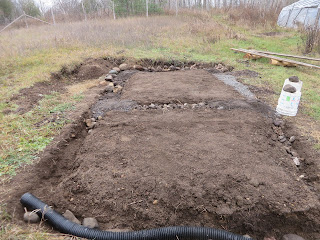
The foundation for the "hot nursery" is started.  For the past couoplk eof years I have used the main floor of the hexagon for seedling starting but the light is poor and the space not custom built to suit the needs. 

This will be the fourth nursery I've built, using everything I have learned from my first three nurseries at the old farm to improve the work spae of this one.

I will consider myself lucky if this gets built before the weather becomes impractical to continue.


Of course, there is much more to relate, but the sun is rising and that means tume to bundle up and head outside...


PS - Word from B.C. is that our two main seed garlic suppliers are ok.  At last word, one was without pawer and operating on generators and the other was on high enough ground to be out of the flood zone.  No doubt they still have their challenges.


It is very unfortunate that there will be a lot of soil remediation to be done.  One farmer I heard from remarked that after the water receded from their field, it left a scent of kerosene all over their land.  I wonder about the ecological and organic farms that have had their nieghbours herbicides such as round up wash over their soil.  This mess will be a long clean up.  


A drained lake is not land!


Tuesday, 23 November 2021

Hello Everyone:

This is just a quick update - I have another busy day(s) ahead of me.  

First off, thank-you to our CSA customers who have supported us this season.  Our final season at Stittsville provided yet another exxcellent yield with several crops breaking  or matching our previous bests.  The fingerling potatoes, carrots, rutabaga, cherry tomatoes and kidney benas all did very well and our garlic did better than usual.  Beets still eluded me and the red chieftain potatoes were not as plentiful as they could have been (though bigger than usual).  

The two biggest disapointments were of my own making - I missed about a 1/3 of our garlic scapes.  I misinterpreted how close they were to harvest and missed them by about ten days.  This probably had an impact on the bulb size as well.  Customers recieved a typical amount of kidney beans, despite only 2/3 of the crop being included in their baskets.  The remaining third were left on the pods too long and got too wet.  As a result, some of the bean pods are rotten.  There are still good beans to be had but it will be a time consuming task to separate the good ones for the bad ones.  

With luck, I should be able to divert these rescued beans to the farmgate store after cleaning them this winter.


Our farmgate store is closing for the season.  Future purchases may be made by apointment.  Carrots, garlic, rutabaga and possibly green onions and kidney beans may be avaialable so keep checking here for updates.

Gold honey is still available.

Our pigs are being harvested as of today.  In about a week, we should be ready to sell our butchered meat.  This year, we are using the Farmersville Community Abbatoire butchering services.

Pork is available frozen and wrapped in butchers paper.

The price list on our pork page is out of date, but should be updated fairly soon.  Expect the new price to be higher than what is listed there as feed and other supplies are more expensive than in the past.


We are thinking of one of our past customers who now lives in B.C.  Two of our seed garlic providers - Rasa Creek Farm and Norwegian Creek Farm have survived the B.C. flooding.


Back in September, Whitsend participated in it's first community farm fair - the MacDonalds Corners Agricutlural Fair.

It gave us an opportunity to meet some locals, sell some of our food, and try out our new tent for the first time.


Here are our prize winning contestants.

Our gold honey took first prize.


Our Persian Star Garlic took second prize. 


As did our white honey.  


There was no category for Rutabaga, so I placed it in the unusual vegetables category.  There is nothing nusal about rutabaga or turnips, so it was no contest aginst some unusual squashes and (I can't recall its name) some kind of plant that I have never seen before.  Should have taken a picture of it, but I suppose vanity won out in that moment.  


Our cherry tomatoes did well.


I was surprised by our first place peppers.


This is our entrant in the odd shaped vegetable category.  

I had intended to enter our regular carrots but after harvesting them, I discovered that carrots needed to have their tops on to be eligible.  Beaten by the fine print!

Allin all, I was impressed by the organisation of the fair.  There was plenty to see and do and it was well run.  Can't wait for next year...