Tuesday, 6 June 2023

Two shares of this season's harvest up for sale.  Contact us for detals...


Hello Everyone:

Mostly good news, but one significant piece of not so good news to start with.

The frost upset some of my early planting schedule.  Some seeds that were planted remained dormant until the soil warmed up enough.  

As such, it appears that our first two planned deliveries for June will have to push forward a week.   We'll just have to tighten our belts or go to the grocery store for another few days.


Here are the first two deliveries of your lettuces.  I have several varieties - romaine (Freckles, Xalbadora, Coastal Star, Sylvestra); and green leaf (Black Seeded Simpson, Bergams Green).  

I grow multiple varieties for each planned delivery week to even out variables such as heat causing plants going to seed too early.

If all varieties do well, you recieve a mix of different types and colors.


These are the first round of kidney beans, there are two other beds sprouting and another 3 or 4 awaiting rain to allow for a decent seeding.

I have succeeded in getting them beyond the growth stage when rodent's can nip off the terminal bud and essentially render the plants useless for growing food.  A very light application of organic castor bean oil makes the plants unpalatable for these animals.

The green beans are in a similiar state.


Extra beans - these are a half bed of romanos I decided to plant to augment the regular harvest.  Their will be a limited quantity available throughout the season.  

I didn't advertise these as I was not sure if the old seed stock I had was still viable. 


Not all the news is good:  These are the peas, going to seed much earlier than they are supposed to (they should not be flowering until about mid June).  I assume this is due to heat stress from last week.

I don't know how I am going to manage this early crop, much depends on how long it continues to grow and flower, and if it is able to set enough pods for a full harvest.  Until then, I'll keep tending them and just wait and see.


Here is your kale, arugula, and tokyo bekana interplanted underneath insect netting.  I've interplanted them to save space.  The arugula and bekana will be harvested for the first delivery, before the kale grows so much to shade out the other crops.  

The netting keeps out flea beatles.  These minute insects  could overwhelm the kale before it is old enough to outgrow the damage; and fill the arugulas with little holes that in turn will reduce the leaves shelf life.

Tokyo bekana is a close relative of arugula, milder and loftier.  I'll be mixing the two together for your harvests.


This is one way the extended lack of rain is causing disruptions for me.  I have these beds ready for the next round of potato planting.  

I don't want to plant the tubers in extremely dry soil, as their moisture will attract the wire worms and lawn grubs, who in turn could either eat the seed tuber before it can start growing the plant, or damage the potatoes as they develop.

If we don't get rain very soon, I'll have to take my chances and manually water A LOT to keep the soil moist.  


Is this the future of farming?

We'll find a way...farmers grew food through the pandemic.  They continued working the fields in during WW2, plowing around the wrecks of planes and tanks.  New varieties of crops were developed during the solar minimum (snow peas in England).  Crops were even grown - though admittedly not very well - during the "year without a summer", 1816.

We'll find a way!


Thursday, 1 June 2023

Pepper plants for sale!!!


We have peppers, too many for our own use.  If you lost some plants to frost, or don't want the typical bell peppers that the department stores dish out, then contact us.  Please note that some varieties are limited, so call soon.  I'll add a photo of our plants as soon as the camera battery is re-charged...

If you are a CSA customer, you can expect to find some of these in your harvest shares this season.

Here is what we have:


King of the North is a standard green to red sweet bell pepper that was developed in the thirties for the short, continental seasons (cool spring and autumn, hot summer).  60 days green, 85 days red.

Abay is a hybrid sourced from High Mowing seeds.  85 days green, 95 yellow.  Large thick walled fruits adaptable to many growing conditions.  A new one for our farm.

Olympus is another standard green (65 days) to red (85 days) sweet pepper.  Potential for high yield. Tolerant to hot weather.

Carmen is a sweet Italian frying pepper.  60 days green, 80 days red and very sweet when fully rippened.  First time we have tried this type of peppers.

Milena is a standard bell that goes from green (60 days) to orange (80 days).  I was looking for a color other than red and settled on this one.  


Two CSA shares left - contact us soon if you want some farm fresh produce that is organically grown on a real farm that is part of your community.

An added bonus - beat inflation!  Buy your share now and insulate yourself from the grocers prices.


Hello everyone:

Lots to catch up on after a very intense period of time here at the farm.  

Little time for rest, as there is a lot of watching of  birds, mice, and farmers to be done.

Cayley is defintiely slowing down due to arthritis spreading to her knee, though she managed to bring home two mice in the past week.


I'll start by going back a couple of days, when frost mitigation was the primary task in the field.

During the warm spell prior to the frost, I transplanted a third of our peppers and onions, and the chard and celery seedlings.   I knew that the weather was still unsettled but had no choice as the nursery was getting too crowded.  I also sowed beets, spinach, and peas.  I had to start these early as the peas and spinach needed the cool temperatures to thrive and that June was likely to be very hot.


Out came the row covers - three layers for most crops, and two for the more cold tolerant produce.  

Some days, partcularly before the coldest nights, I opened up the covers to allow sunlight to heat up the ground, and to assist seed germination.

Our heavy muck soil is slow to warm but when it does, it holds it's heat.  I also watered regularly as moist soil is a better thermal mass than dry soil.


Beds that were empty were also covered with IRT mulch to save moisture from evaporation.  I had some beans started part way through the frosty period as well, and used the IRT to keep the soil warm enough for germination.  (Beans can  germinate without sunlight).


As the covers come off, I found the fruits of my labour.  Most plants survived, with only a loss of two out of fifty pepper plants.  I had some in reserve, so we won't notice the difference.  

One celery also failed, though it may have been for lack of moisture as my irrigation system is not perfect.


As soon as the covers were off the frost protected plants, I continued transplanting:  the remaining third of the peppers and onions, and the lettuce and celeriac.

These are lightly covered for a day or two to provide some shade, which helps them transition to their new living space.  It also helps conserve ground moisture now that evaporation is a big concern.


Recall the photo above with the peas?  They are doing just fine.  The cold might have helped somewhat, though I protected them anyway as they need some warmth to continue growing.  

I'm now getting the stakes in to start trellising the plants.


Not just the peas doing well, the garlic is continuing to grow.  


I'm not doing all the work right now, some of our past efforts are also starting to bear fruit.  Our wild flower meadow is covered in blue flowers which I think is flax.  

This will be very helpful for our bees, as these plants are flowering just as the first round of dandelions are closing up to set seed.  We hope to add more flowers to this field over the next few years.

June is a difficult time for honey bees as the number of wildflowers in bloom decreases for a period of time.


One of our two pear trees succumbed to the winter; the other (see photo) has put forth some leaves at it's base.

The three electric fence stakes were used to support the burlap cover over the winter.

Our intention is to stat a few more fruit trees over the next few years - cherry trees are high on my wish list.


Julia has been busy in her spare time with plantng flowers:  Sunflowers by the hexagon being one example.  Bees, chickadees, and other predatory and pollinating insects also enjoy these.

She also has the cardoons out now, which are among the favourite of plants for bees. 


Lettuces are doing well so far, in spite of the heat.  I supply them with a little irrigated water, though unlike most vegetable crops, lettuce prefers to have wet leaves (makes the leaves softer after harvest).

I discovered at the old farm that relying on the irrigation for lettuce tends to cause rot at the base of the plant.


Here is a good example of progress at the farm.  

These first tomato beds were being prepared during the frosty period, judging by the number of row covers in the field.

I am putting spare grass clippings into the beds to add extra organic material to loosen the soil and help retain moisture.  


As soon as the frost was gone, the first tomato transplants were in the ground, with loosly applied covers to provide shade and moisture retention as the plants recover from transplant stress.


Yesterday, I put in the next third of tomato plants, and removed the covers from the first transplants.  Just one more 25 foot bed (to the right) to clean up and plant tomatoes into.

We have one new tomato addition this year, a variety called Sergeant Pepper.  This is a long season tomato (it takes about 20 days more than our other varieties to mature) so I ordinarily would not try it.  However it came as a gift from our farm friend Hillary at Maple Lane Farm.

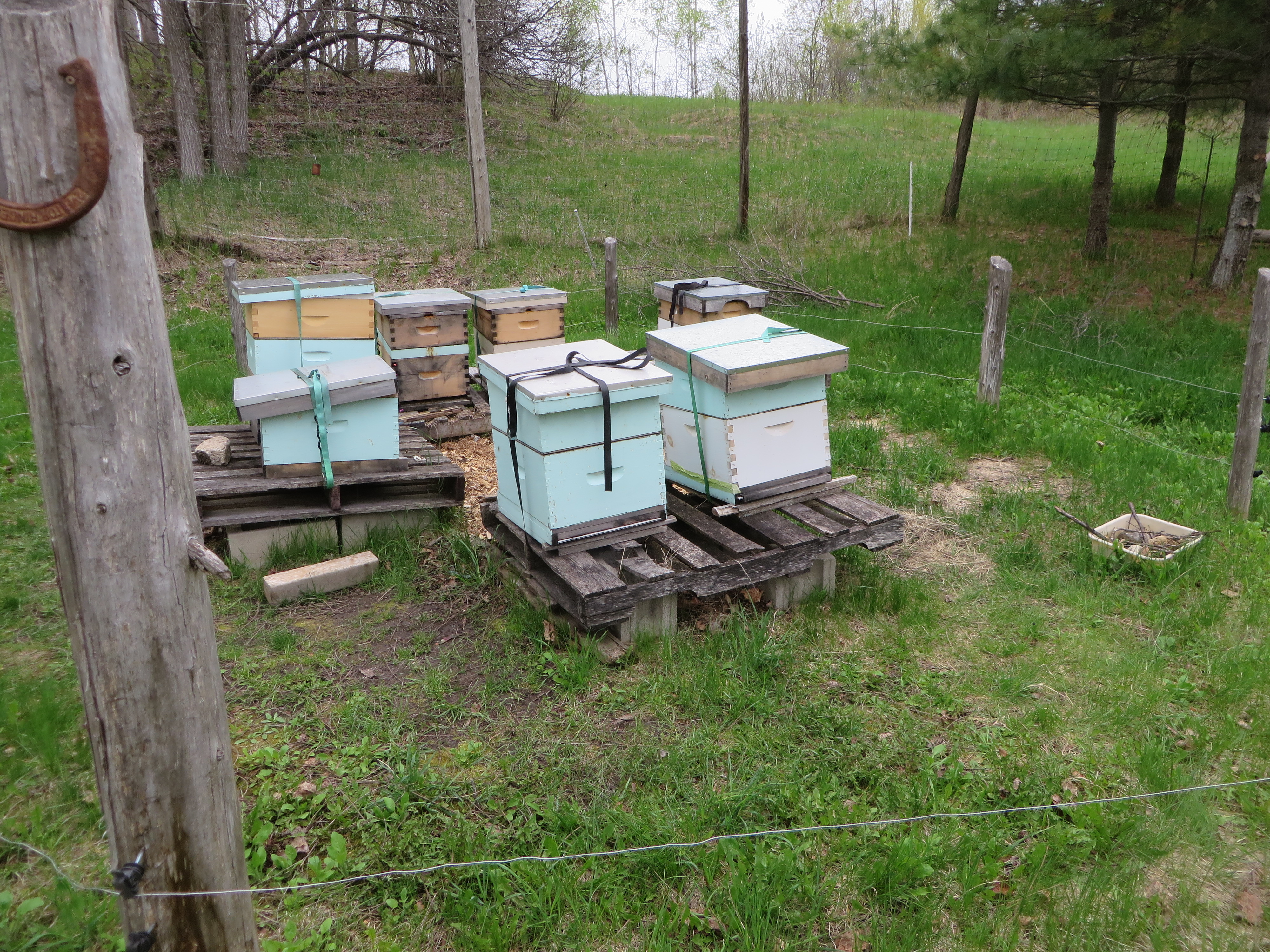
We had one of our bee hives swarm and as we did not want another hive (six are more than enough), we called her and asked if she wanted it to replace some of her winter hive losses.

She was quite eager to have another hive, so Julia caught the swarm and got it into a bee box, and Hillary arrived that evening with some free herb transplants, a black hot pepper plant, and this interesting tomato to add to this years crop.


One final note:

We want to remember one of our farm colleagues, Janet Ellenberger.

I called Henry Ellenberger a few weeks ago to arrange for our annual seed potato pick-up in Coe Hill, and was stunned to learn that Janet had passed away in April after a short illness.  

I learned while speaking with Henry that Janet worked off farm as a social worker.  Her warm, open, you-can-tell-me-anything smile matched that experience.  She was the farm gardner for most of their vegetable crops, helped with the potato growing and grading, and aside from an instagram account, limited the internet use at the farm to one day a week - a real sign of sanity in my opinion. 

Aside from that, we did not know Janet very well (she was often working off farm whenever I was up there), though there were a few times when we crossed paths.  In particular, we recall the time they invited us in for a lunch snack of baked potato (naturally) and sour cream, augmented by some of Janet's home made cheese.

I phoned them after hearing that their area was particularly affected by the deracho, and she calmly related their terrifying experience.

When we made our trip up there on the 13th, Henry seemed in good spirits, showing us the damage from the deracho and explaining how their church group and nieghbours helped with the clean-up.  

He says that their is a young couple just starting their farm a few miles away who have also been helping out this year with the potato growing: learning the grading, planting, and maintainance chores that Janet used to do.  

We left feeling confident that Henry was surrounded by a caring community and keeping himself well.

Thank-you Janet for your part supplying us with seed tubers from the only organic seed potato farm in Ontario.


Sunday, 7 May 2023


If you have recieved a flyer or read an advertisment, here is a quick pitch:


For our new post as of April 26, scroll down...


-Purchase a share of the produce in advance.  

-10-12 harvests between mid June and late November 

-Customers in Ottawa have doorstep delivery

-Customers in Lanark/McDonalds COrners area pick up at the farm gate store.  A few complimetary items shall be available throughout the season to make your drive worth while.

-Broad range of produce available according to season:  Beans and peas, lettuces and greens, potatoes and onions, tomatoes and peppers, carrots, rutabaga, celery, garlic... 


-Honey (and pork if we have piglets this year) available as additional purchase

-All farm products are grown using organic methods

-Excellent quality - I have over twelve years experience from our farm in Stittsville

-Shares cost $350.00 for the season, payable in two installments

-Half shares available for half price, 5-6 deliveries per season

-If crops are a little abundant, quantities are topped up at no extra charge

-If we have a particularly good gowth of one or more crops, you may puchase extra amounts for putting food by (such as canning for tomatoes, storing carrots, etc.)  


Our share sales have crossed the 80 per cent mark.  If you are interested in a share of the farm produce, please call us soon.


We will also have a farm gate store at our location on Iron Mine Road this year for those of you who wish to puchase from the farm without a year long subscription.  This is where we sell excess poduce.  Please note that share customers purchases take priority if one or more crops during a given week perfom less well than expected.


All the information you need to know about our farm is on this website.  If you have any questions, feel free to contact me by email or phone.  We look forward to hearing from you.


Here is one rake I won't be using for several weeks.  

This storage place at the back of the prep station is usually a high traffic area.  I wasn't there for a couple of days and that was all it took for this robin to decide it was the perfect place.

I can live without the rake but the rest of the tools have to stay out of the rain.  

Our compromise is that I don't use the hooks nearest the nest.  


Two big milestones for the opening of the farm season today:  the hoses are sterilised and laid out.

I pour a cup of Hydrogen Peroxide 5 per cent into the hose and walk it the full length and back again.  After two repeats, the peroxide is flushed out.  

Peroxide is a disinfectant that is permitted by the organic standards as it leaves no chlorine residue like bleach does.


The other milestone is cleaning out the winter bedding in the chicken hutch.  We only have five birds so the task shouldn't be too onerous.

Unfortunately, A-frame structures don't leave much room for ones head or elbows.  

We use a mix of our own straw and pine shavings for bedding.  


The used bedding goes to the compost area and layered with grass clippings, a bit of soil to inoculate the compost with molds and bacteria, and some moisture to get the microbial activity started.

By the end of the year, the new pile at the back will look like the pile in the middle, and by next spring, will look like the remains of the pile in the foreground left.  

We leave a lot of our property unmowed to preserve space for predatory wasps and other beneficial wildlife, but some grassy areas are considered crops.  I don't mow, I harvest nitrogen.


Another task I completed today was transplanting the first round of onions.  I gave them some row cover to reduce the sunlight a bit while they adjust to their new home for the season.  There will be a few chilly nights this week as well.  Once the weather is settled, the row cover comes off and replaced by insect netting which is lighter and prevents the onions from overheating as they would under the heavier row cover.


They don't look impressive now, but in about 90-100 days these should be full grown yellow onions.  I have two varieties in this bed:  Blush and Cortland.

Cortland is a standard yellow onion.  Blush has a light rose tint in the interior and a slightly sweeter flavour.  Blush types are highly prized in middle eastern cuisne.

Later in the week I'll be planting out the red onions and the cippolinis.  


Our snow peas are germinating.  Look very closely and see the two rows of green sprouts in each bed.

The cool spring we are having is ideal for peas.  

There are also a few shell peas at the back, though there was not enough seed for the CSA.  These will be sold at the farm gate store.


The spinach was sown a couple of days ago.  Again, the cool weather will help this crop a lot.

 I'll need all the help I can get - traditionally spinach is a disapointment more often than not for me.  This is our first year growing it here, so I am curious to see how it will respond to the different soil.


A shot trip down the road fetched us some wood chips.  Julia is using these for making flower beds to augment the bees food.


As for the bees, Julia added the "supers" yesterday.  These are the extra frame boxes added to the top of each hive.  A lage screen separates the top and bottom boxes - large enough for the workers to enter the empty frame to store honey, but too small for the queen to enter tolay eggs.

One hive to the left (the one without a super) has a queen that is only laying drones.  Drones are the only males in a hive colony, and only mate with newly hatched queens.  


Without female bees to do the work, this colony will eventually fail.  We'll likely remove the defective queen and combine the remaining worker bees with one of the less populous colonies.


Meanwhile, the flowers keep growing...

Talk to you soon, 

Bob


Wednesday, 26 April 2023


Hello Everyone!

Effortless observation.

If only watching the farm were this easy.

Cayley was too tired from her trip to the vet yesterday to know that she is in good health for a 17 year old.  


There is plenty to see.  The crocus' Julia planted last fall are starting to appear.  A few snowdrops  came up.  These are great early season flowers for our bees and other pollinators.  

Plants like this help tide the bees over until the dandelions come out.  Dandelions are an essential source of food for bees as they are among the first wildflowers to appear in large quantities, right when the hive is hatching its new generation of worker bees.


Your food is also starting to to emerge.  

Here are the first garlics.  The emergence rate appears to be about 98-99 per cent, typical for us.

Not as much green garlic for this season, though more than enough scapes to make up for that.


The priority task right now is to clean up beds that provided food late fall, and could not be cleaned as the ground was frozen.  

Grass starts growing at 1 degree celcius, and the longer it grows, the more time clean up takes.  It is essential to get ahead of it early, otherwise it slows down progress for the entire season.

Tilling is not an option with bluegrass or quackgrass, as the tines chop up the rhizomes and propogates the grass that much quicker.


From last autumns kale bed to ready for early summer green beans.

The old kale stems will be burried tohelp break down and add additonal organic matter to the soil.  Any stems that are still not broken down by planting time will be tossed into the compost.


If I am cleaning up one bed, 59 others are sprouting their first weeds.  To help stay ahead, I use a bit of plastic mulch to suppress some of that growth.  

Once the messiest beds are cleaned, I start cleaning the beds I intend to plant early spring.  

Beds that will not be used until mid summer for the late atumn crops will recieve a cover of peas and or buckwheat to suppress weeds and feed the soil.


The pulled rhizomes would continue to grow and sprout blugrass and quack grass if I were to put it in the compost, so these are diverted to the laneway to fill in wheel ruts.  


Here's one reason to reduce tilling:   At first I thought the wheel hoe had turned up a bright piece of legacy plastic, but when I picked it up and turned it over, I found it was a turtle.  The shell of Painted Turtles are brightly colored.  

At first I thought it was dead, but after a moment, it poked it's head out and started crawling around.  

Which means there is some egg laying going on at the back of one of our vegetable beds.

There will not be any turtles in this years delivery, even if they emerge along with the spinach planned for that bed.