Sunday, 24 February 2019


Hello Everyone:

As I write, the big storm rolls into Eastern Ontario…is this March arriving like a lion?  If so, it suggests an early spring.

News for the past week – the onion seeds have been sown in the nursery and the first seed order placed. 

Next on the seeding list are the leeks, parsley and celery.


If you are intending to purchase a share of this season’s produce, order soon.  I expect there will be a smaller customer base this season while we go through these growing pains.


I have received my first inquiry about an internship…if you are interested in getting a well rounded introduction to small scale agriculture and access to a ready to go starter farm, be sure to contact me soon at the phone number or email address below…


We have lived through our first few weeks here without mishap.  The house is mostly settled into and work has started on the outbuildings, starting with an inventory of the items left behind by the previous  farmers.

Old farms have a way of collecting tools, supplies and spare parts.  Ours is not quite as cluttered as some that I have seen.  The previous owners had indicated a few items of interest to us, but there were still a few pleasant surprises. 


The woodshed contained a mess of old tools, such as some bed rakes, spades, and shovels.  

I was especially thankful for the great number of buckets – something I always seem to be short of.  One of these was full of various irrigation and hose connectors, nozzles, and sprinklers for just about every application one could think of.  


A rack of shelves (looks like a pan rack on wheels from a bakery) held an array of shears and other implements for use in tree maintenance.  An expected find was the great length of unused electric fence wire and tape; better yet were a pair of spare fence gate handles.  Not expected was the supply of hay bale twine.  If I use this for tomato and cucumber staking, it’ll last part of a lifetime.


Two buckets are partially full of either some hard packed ash from the wood stove – this could be used as a soil amendment as it is full of potassium – or maybe it is unused portland cement from the construction of the root cellar foundation.  Either material could get some good use here.


The drive shed is bigger and likewise had more (and a few larger) items.  It dates back to the original farm on this property.  There is a very old tree saw in here that probably dates from the original farm.  

In addition, the previous seller left a riding mower (which needs new tires) and a walk behind tractor (which I purchased from the sellers) that has attachments for both a snow thrower and a tiller. 


This is where a big supply of lumber is stored: 2x6’s for building a stairwell in another construction and for making shed sill plates.  2x4’s for improving a few of the sheds or making repairs with.  Cedar boards for building a new shed. 

As well, there are more buckets, hundreds of feet of hose and irrigation tubing, bee boxes, a child’s sled (useful for hauling all this stuff around while I organise the various buildings) and a box of cassette tapes that went to the township share centre after a quick perusal to ensure there were no collectible titles.

As for tools and supplies, the big finds were two chainsaws plus a third chainsaw apparently being used for spare parts, a pry bar, an ax, and several cans of carburetor cleaner and other greases, gases and goops for a variety of machinery chores.  Most useful, a heavy table for doing machine work on.


The A-frame was one structure I was quite interested in, as it is situated close to the growing fields.  Having not had the opportunity to see the cellar portion of this building, I was able to shovel in and break the ice dam holding the door shut. 

Not much in the cellar, other than it was noticeably warm (being bermed into the ground on three sides) and having an earthen floor – ideal for allowing ground heat to escape to the interior.  This room is divided by a barrier that will allow for two types of livestock, or separating a jealous drake and hen from the rest of a flock.


The upper floor has a lot of gear for honey making (some of which is already spoken for and some of which we inherit with the farm.  Here is also a sink (a little too small for my needs) and a food dryer (I’ll try the tomatoes with it this year).  A wagon suitable for holding seedling trays shall probably get a lot of use here as well.


The most notable outbuilding on the property is what we call the ‘hexagon’.  A six sided structure two stories tall with attic and cold cellar.  More bee supplies, such as a couple dozen kilo jars, more tools for woodworking – including a battery powered drill and a very nice carpenters square which I suspect the seller didn’t intend to leave.


Now that the sorting cleaning, and inspecting is done, I am turning my attention to planning how I am going to use these buildings and some of the surrounding landmarks…raw material for the next post.


Friday, 11 January 2019

Update January 31st:

Hello everyone:

We are here.  Our internet is on.  Our new phone number is listed below.

We arrived in Lanark, bringing our little load of worldly stuff, a lot of ideas and plans and a whole lot of cold air and snow.


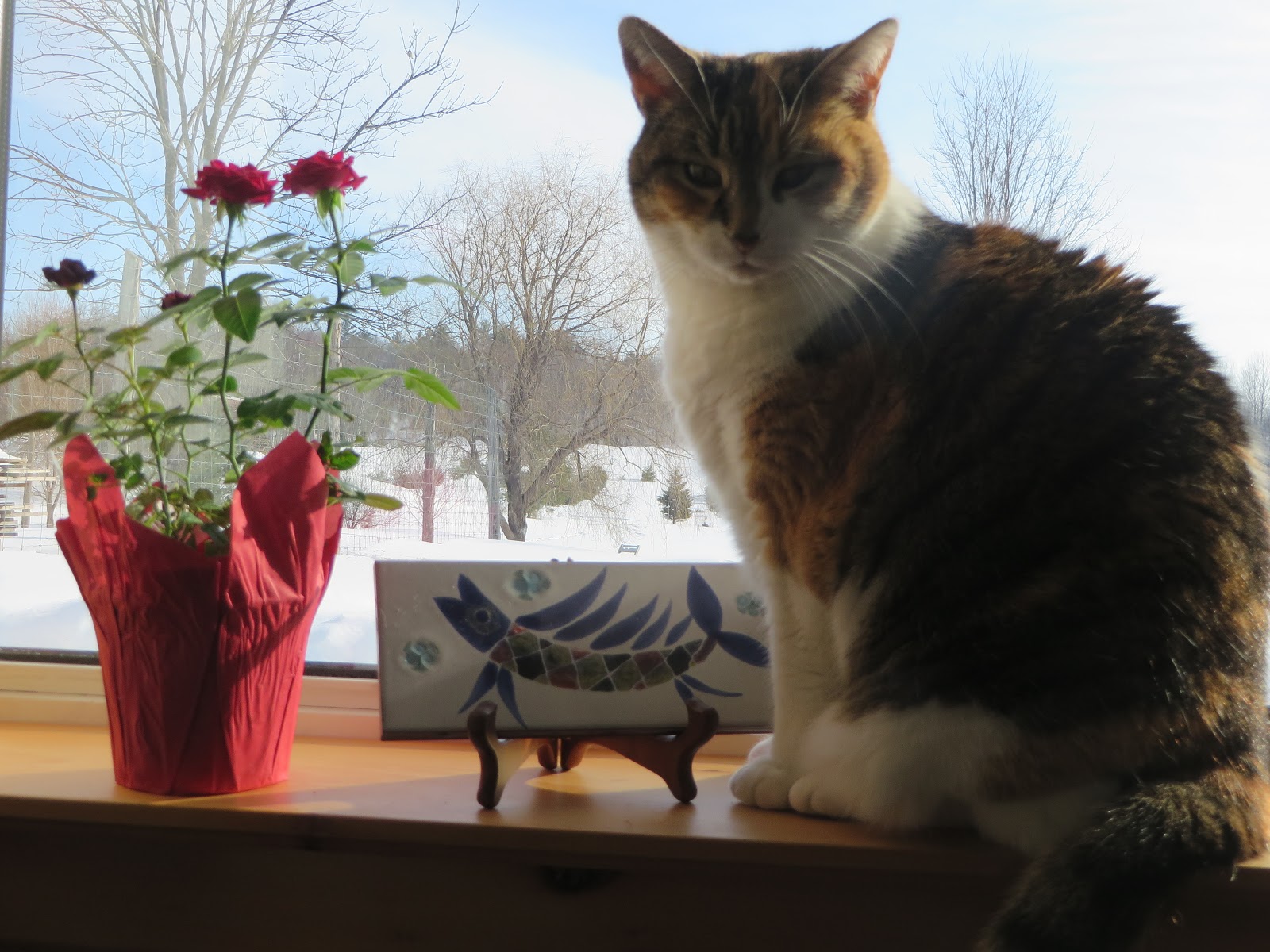
We may own the property but the house is ruled by Cayley.  She gave her final word on our being here after about two days by selecting a new piece of our furniture as her own.

According to the sellers, she is a good mouser.  Considering her pouncing speed and the sharpness of her claws, I'd be inclined to believe them.


Now that the house is mostly unpacked and roughly organized, I've started work on the first outbuilding. 


Hello Everyone:


Welcome to 2019...I hope this season is a fruitful one for all of us.

This will be a big year for us, lots of learning curves and plenty of work.

I’ve spent a lot of time considering various scenarios and have finally settled on how to proceed.  There are a number of variables that will affect how this season’s production plan will unfold, so I am leaving plenty of room to adjust our plans.


Please find more details on the “How to Buy a Share” page.


Agriculture always has its share of unknowns, I’ve learned to live with these over the years and thankfully some of my past careers gave me a bit of experience with this as well.  I can say I am looking forward to getting through this period of time in which there are a few more variables than usual...until then thank you for your patronage.


I have reserved two piglets, but "mother" has to successfully deliver and wean a big enough litter - we are at the end of the waiting list.  If pork is available, it will be ready in late fall and purchased separately from the produce basket; customers get first opportunity to purchase cuts.


Shiitake Mushrooms:

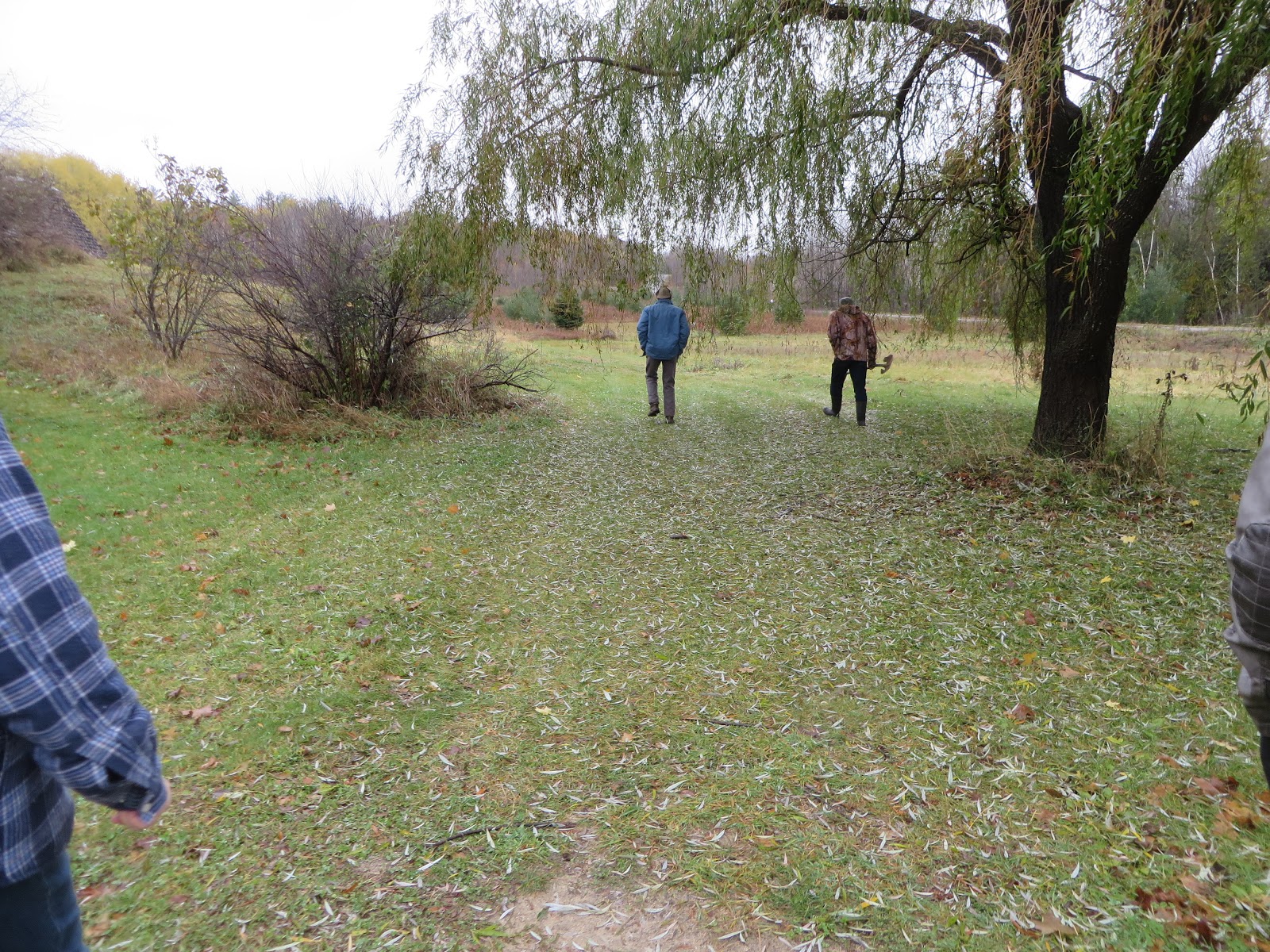
Two weeks ago, we were at the new farm taking a tour of the woodlot with the sellers.

During that time, we found that there were oaks and a source of year round water.

These are two of the ingredients required to grow shiitake mushrooms.  I have since sourced the inoculation plugs and equipment needed to inoculate the oak logs, AND a local farmer eager to share their experience in this endeavour.  If all goes well and I can get a suitable quantity of chicken wire (to keep the squirrels and chipmunks from eating the mushrooms) then we can start to provide the fruits of the forest in about two years...


This would be the realization of another wish I have had since doing a workshop on shiitake mushroom growing during my internship.


If you are aware of anyone in the Ottawa area who is interested in this model of agriculture as a potential career; forward them the following link to my advert on the “Farmlink” website below.  My listing is under the heading “Certified Organic Starter Farm Opportunity”.  If you look on “map view”, our listing will appear under the tab near Munster.  If you look on “list view”, our listing will appear near the top of the first page.


Friday, 21 December 2018


Hello Everyone:

Whitsend is preparing to move Lanark County.  We have purchased a property in the highlands, formerly the site of Blue Chicory Farm.


The farm comes with some of its bee colonies, bird roosts and a nesting hut; a cold cellar, and some recently constructed facilities that can be used as a nursery and secure space for produce storage and curing.   There is a mature asparagus bed and about two dozen rhubarb plants.


The farm also comes with a myriad of minor repairs and upgrades.  Most of its growing field has not been worked for a couple of years and so will need a season of cover crops (and if all goes well, a pair of pigs will be hired on to help out with this).


Most of the outbuildings will require some minor fixing and or preparing for use.  As the season progresses, structures at the Mansfield location will need to be dismantled and transported to the new farm, to be re-built there.


If any of you are interested in taking part in any of these projects, feel free to let me know.  We have all winter to plan and a full season to complete them.  No one will leave the farm empty handed. 


As for this season’s growing plans…I intend to use the Mansfield location to continue growing the produce this year as I have some beds that are well amended and ready to go for spring.


I estimate I can spend half of each week there tending a smaller quantity of crops.  Therefore, our production plans will have to contract significantly for a year. 


I have listed one possibility as to what our production plan may look like for next year, on the “Potential Plans for 2019” page (see the tab above).

I’ll have to generate some income this season, so I want to make sure that I can come up with a plan that is palatable for a few customers.  Your feedback will be essential.


We will be out at the farm later this month to meet with the farm sellers to go over a lot of the growing details that they have to share (maps of their beds and lists of their perennial plants), details such as last guaranteed date before ground freeze, overview of the new tractor, quirks that the very old barn may have, etc…


In the meantime, I look forward to hearing from you,


Have a very safe and satisfying holiday and all the best for 2019.


Bob and Julia


Friday, 30 November 2018


Update December 17:

Thanks to those of you who have responded to the year end survey.  Glad to hear you have had a good experience.  Having said that, I am concerned that I am not getting the negative feedback that I suspect is out there...I didn't consider this season to be THAT good. 

Still time to send your survey results in,, I am hoping to get some feedback from someone who has had a less than favorable season.  Constructive criticism is always welcome here.


The only other news is that we are grinding our way through the land purchase.  Still a couple of hoops to hop through after an early detour, it is still not a guaranteed close.


Update December 4th:

We are in the midst of a property offer...and all of the paper pushing, meetings, and coordinating that entails.

I have received four replies from the year end survey, thank-you for taking the time to fill these out.  There is no hurry.  I hope to have enough information by mid December to help make some decisions for next season's plans.


I won't have too much time in the coming weeks to work out any other possible plans for next season, other than what I have to post later today.

If you have any comments about the options thus far on the "Potential Plans for 2019" page, feel free to send them in.


Bob


Hello Everyone:

This is a post intended for mid October.  An abrupt change in the forecast changed all my priorities and  prevented it from being completed.

One of the strengths of the small scale farm model is how nimble they are - change can be prepared for on short notice.


How quickly the weather changes.  Looking at the forecast last night (Sunday), it seemed to me as if the next 5 days were not too cold and what appeared to be a slight warming trend toward the end of the week.


Now I see that the forecast is suggesting a minus seven later in the week.  That will be tough, but with a little extra effort, I should be able to protect the crops sufficiently.


Some crops can do without protection, such as these carrots.  The frost might kill off the greenery, but the roots will improve flavor after a frosting.

With time being so valuable, setting up row covers can be reserved for elsewhere.


Still plenty to do...and less time to do it.  Work for the past week has focused on getting beds cleaned up for next season.

Cultivating any weed growth that may have accumulated in the plants under story, aerating the soil with the broad fork - a full body workout that left me feeling slightly euphoric with runners high - amending the soil with compost and rock amendments of phosphorus and greensand, and another round of cultivating to work the compost in.


Calphos is a rock based amendment providing calcium and phosphorous to the soil, which in turn feeds the plants.

Greensand is another rock amendment derived from ancient seashore deposits, providing potassium and over seventy micro nutrients in a form that may be taken by the plant as needed.

Roots, fruits, and most brassica crops tend to perform better in soil that was amended the previous autumn.


There are other benefits to getting the beds prepared in the fall.

Everything is growing quickly in the spring - especially the weeds.  The more germinated weed seeds that are wiped out by surface cultivating in the fall, the fewer will sprout next season.

With the beds ready to go, a late can spring has less impact.  As I learned this year, a very late spring can nullify the head start.

Next years country is waiting...


I don't do very much production planning until after the ground has frozen.  When the freeze occurs, no more work on the beds is possible.

This gives me a limit from which I can plan my early spring work from.

Knowing that, I can calculate how many customers the field is ready for.


The garlic beds are now cleaned up and only need a bit of raking to smooth out the surface to prepare them for the fall planting of garlic bulbs.

This is a very time dependent task, it needs to be done before the ground freezes.  The freeze date in our area has 'never' been before November 15, but with the weather cooling considerably over the past two weeks, I suspect sooner is better with this task.


Here another amendment is added.  I collect damp fallen leaves in the autumn and store them for a season, creating a leaf mold amendment, which some garlic growers claim is beneficial to garlic.

In the fall of 2017, I also used leaf mold when preparing the next seasons beds for onion and leeks.  I made this assumption on the knowledge that these crops are closely related to garlic.

I credit this as one of the reasons my onions and leeks did so much better than in seasons past.

Look closely and you can see the leaves incorporated into the bed.


Days later...the frost has finished off the zinnias (foreground).  The russian kale (this side of the green watering can) has not been negatively effected by the hard frost.

The hard frost has frozen the row covers to the ground, so I can't look under them (without tearing the fabric) until the day has warmed up.

Lots of suspense until then.


The cold does effect kale.  The leaves darken in response to chemistry changes within, making them more pleasing to the eye for those who like purple leaves. 

Brassica crops taste better after frosting, the result of the chemistry adaptations the crop uses to protect itself from the cold.

Better eating through chemistry!


A few days later, another chilly night and some snow.  The kale is still going strong.

In the event I changed my mind about covering the kale, I had pre-positioned the row cover hoops.


This worries me.  The cover has flattened under the weight of the snow, bringing the chard leaves into contact with the chill of the snow.

I had considered adding extra hoops to some of the cover should this occur, but there were other details to attend to the day before.


The carrot tops are limp from the snow exposure.  48 hours later, they are upright again, indicating that there is still some growth occurring in the roots.

Leaving the carrots our through the first snow provided an extra ten days or so of growing time.  Slower at his time of year, with shorter days, but every bit counts with this crop seeded a little later than I prefer.


Finally, some covers can be removed to see how other crops fared.

The chard made it.  Some years I am not so lucky with this crop's cold resistance.


The red chard in particular responds to the cold by changing leaf color to darker red or even a bronze hue.

I leave the cover off during the day to allow the soil to soak up heat from the sunshine.


Always a challenge balancing between leaving it in the ground and harvesting it.  Either way, the crop needs protection from the cold.  I have more control over harvested crops placed in the nursery, but space is limited. As well, I prefer to keep the leaves as fresh as possible


Inevitably, the season comes to an end.

By now, the row covers are dry and stored away from rodents - who love this for nesting material it seems - and the barn is weatherized for the winter.

Now I have time to get caught up on the writing!