Hello Everyone:
As the season draws to a close, I’ll take some time to review the farm’s performance this past season, and consider options or improvements for next year.
I have a few more notes to add over the next few days.
At some point, I will be posting several photographs on the "Curious Food" page as well.
In the meantime, I am starting to plan for next season. I hope to see you there!
Overall, the single most decisive factor was the spray incident. As with any complex system, one change ripples out to affect numerous parts of the whole, the overall impact was the way my time management was affected for the entire season. Many tasks that I have been able to cover with ease in past years were impossible to complete, and several details I wanted to focus on thsi season also had to be set aside. (See spray incident, below and throughout).
Despite this, there were several success stories.
 Legumes: Spring peas and beans generally did very
well.
Legumes: Spring peas and beans generally did very
well. Snow Peas: Spring yield improved over previous years. I altered the sowing dates for two pairs of beds to allow the first beds to finish before second beds started, but the changing day length still had the second set of beds overlapping their yield with the first pair.
Romano Beans: I trialed Romano ‘Dragon Tongue’ beans this season and was impressed with the flavor and productivity. Some customers preferred romanos to the other beans. The biggest detractor for them is the length of time to grow to fruition.

After the first romanos were delivered, a few customers
asked if I could deliver them as a dry bean.
I let the beans stay in the field to dry, but unfortunately the beans required
too much time for this to happen. I left
them out, hoping for a warm fall but to no avail, they molded when the weather
turned cool.
I‘ll continue growing romanos,
Space permitting, I might try these as a dry bean next season with an earlier planting date.
Green Beans: Provider grew quickly in early May and then struggled somewhat due to teh heat. It's yield overlapped with the peas and the second round of 'Maxi' green beans, resulting in a lot of compost material.
'Maxi' are very easy to pick quickly and their short growing period makes them somewhat easier to insert into the production schedule. If I can find a good alternative to ‘Maxi’ green beans, I’ll go with it as ‘Maxi’ does not yield very well after one week and the bean quality declines quickly).
Kidney Beans:
Snap Peas and fall Snow Peas: This was the first season I was able
to harvest fall peas in any quantity, but the success was short lived.
The snow peas succumbed to powdery mildew – they do not seem to be well suited for fall growing.
The snow peas succumbed to powdery mildew – they do not seem to be well suited for fall growing.
The snap peas did well but not enough seed
germinated to allow for a decent harvest.
This is progress; I’ll be trying snap peas again. Snap peas grow best in cool weather, though
they typically require 2 to 3 weeks longer than the snow peas to come to fruition. Assuming they are to come out in mid
September, this means they have to grow through the hottest part of the season,
which interferes with quality and quantity.
Leaves
(Excluding Brassicas):
 Chard: Dependable as always. Observed that less watering promotes better growth..
 Spinach: Germination continued to improve, and to a degree, I timed the thinning better than in previous years. The best performance came from the first round of ‘Shelby’ variety spinach, which unfortunately, was in the buffer zone after the spray incident. Fall spinach germination was erratic, the first two beds did well, and the next four did poorly. I think the latter case was lack of sunlight, as I did not remove the row covers on a couple of days when pressed for time.
I am very impressed with ‘Shelby’, and hope to source
more seeds for the future. ‘Corvair’ also did fairly well.
Coriander: First bed was in the spray zone. I tried placing small quantities of the plant in the ends of carrot beds but there was not enough to go around on a weekly basis.
Coriander: First bed was in the spray zone. I tried placing small quantities of the plant in the ends of carrot beds but there was not enough to go around on a weekly basis.
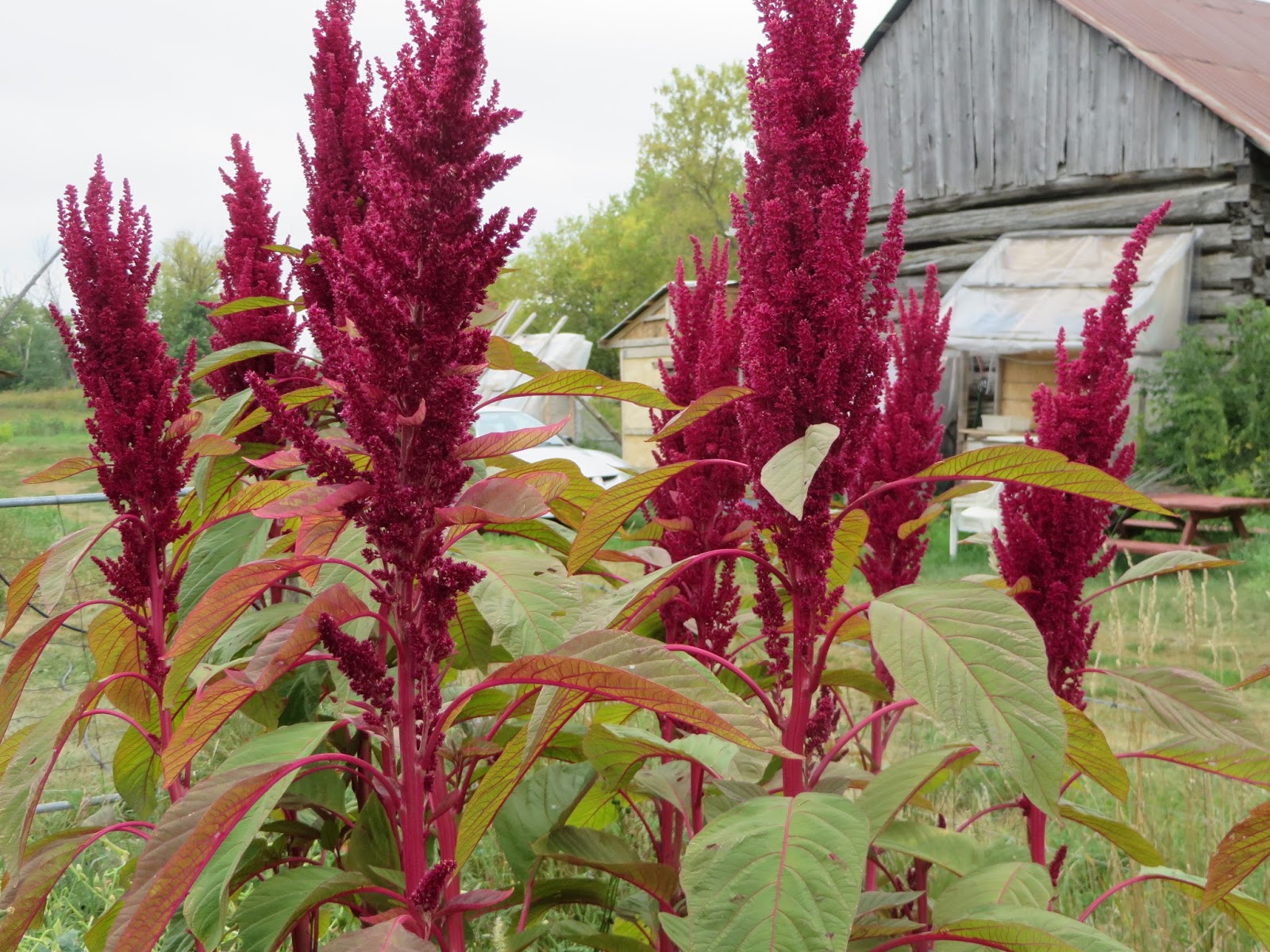
Amaranth: Better results with harvesting younger. Most customers were not interested in this crop, though some really enjoy it. Had more opportunity to cook with it this season and found it an excellent replacement for cooked spinach.

Another factor was the need to rely on irrigation for
the lettuce (recall how I mentioned last season that I suspected the lettuce
would be better off if hand watered?)
Again, not enough time…
Fall brought improvements to lettuce production. Unlike previous years, Rouge D’hiver (our
winter lettuce) germinated after I experimented with freezing these seeds. Timing this variety is tricky as it must be
planted early enough to size up but not too early as it will go to seed before
harvest if the fall weather is too warm.
I was able to get it almost right, the
heads were not fully formed but the yield was sufficient.
Celtuce: Improved over last year, for two reasons. First, I switched this crop from leaf beds to fruit beds. The reasoning is that the leaf beds are higher in nitrogen, which resulted in a lot of leaf growth in previous years.
I grew the celtuce interplanted into fruit beds with higher phosphorous content for less leaf and more stalk. In doing so, the plants were somewhat shaded by the fruit plans, causing the stalks to be taller.
Celtuce: Improved over last year, for two reasons. First, I switched this crop from leaf beds to fruit beds. The reasoning is that the leaf beds are higher in nitrogen, which resulted in a lot of leaf growth in previous years.
I grew the celtuce interplanted into fruit beds with higher phosphorous content for less leaf and more stalk. In doing so, the plants were somewhat shaded by the fruit plans, causing the stalks to be taller.
The overall result was that some successions achieved the goal of having longer, thicker stalks.
The results were somewhat erratic, so I assume there are some details to work out to ensure a more consistent result.
The results were somewhat erratic, so I assume there are some details to work out to ensure a more consistent result.
 Fruits: All fruits are starting to show improvement in beds where a cover crop of buckwheat was sown. This fertility building practice is now part of the seasonal routine, and should begin to yield results for all fruit crops over the next four years.
Peppers: Generally grew well but there were
several instances of seed cross pollination.
The hot peppers seemed to be particularly susceptible. As a result, the seed saving I had planned
for this year had to be halted. It may
have affected the flavor of some peppers, though to date, I have had only one
customer mentioning this.
This was the final season for ‘Yarden’ variety green peppers. The
cone shaped ‘Lipstick’ is by far the best performing green pepper here.
 Tomatoes: Two of the five tomato beds were in the spray
zone. We lost half of our yellow
cherries and all of our cooking tomatoes.
Fortunately, the 'Moskvich' tomatoes increased their yield after a two
year plateau. I now have two more
‘Moskvich’ tomato beds prepared for next season, though I anticipate they will
require two years of work before they plants achieve the same yield – it will
take that long to get the soil in the new beds rich enough.
Tomatoes: Two of the five tomato beds were in the spray
zone. We lost half of our yellow
cherries and all of our cooking tomatoes.
Fortunately, the 'Moskvich' tomatoes increased their yield after a two
year plateau. I now have two more
‘Moskvich’ tomato beds prepared for next season, though I anticipate they will
require two years of work before they plants achieve the same yield – it will
take that long to get the soil in the new beds rich enough.
‘Great White’ tomatoes were cited by two customers as
their favorite Whitsend produce this season.

 Summer
Squash: Based upon
last year’s performance, I had hoped to plant two successions of cucumber and zucchini instead of all at once. This year, the
first round of seeds germinated slowly in the nursery. So slowly that I panicked (thinking they were
not going to germinate at all) and planted the rest of my limited amount of
seed. They all germinated, albeit after
about four days longer than usual. So,
we had a lot of cucumbers for about four weeks and then the plants ceased to
perform well. I only had one bed
available for zucchini.
Summer
Squash: Based upon
last year’s performance, I had hoped to plant two successions of cucumber and zucchini instead of all at once. This year, the
first round of seeds germinated slowly in the nursery. So slowly that I panicked (thinking they were
not going to germinate at all) and planted the rest of my limited amount of
seed. They all germinated, albeit after
about four days longer than usual. So,
we had a lot of cucumbers for about four weeks and then the plants ceased to
perform well. I only had one bed
available for zucchini.
The trialed variety of squash, Lebanese ‘Segev’ (also
known as Cousa), did fairly well though the yield was low compared to other zucchini
varieties I have grown.
 Winter
Squash: Two types
grown this year, single serving size ‘Butterscotch’ and ‘Delicata’. I have not had the opportunity to sample ‘Butterscotch’,
but it outperformed in one respect – I am certain that some are too large to be
called “single serving size”.
Winter
Squash: Two types
grown this year, single serving size ‘Butterscotch’ and ‘Delicata’. I have not had the opportunity to sample ‘Butterscotch’,
but it outperformed in one respect – I am certain that some are too large to be
called “single serving size”.Delicata yield was very low. Midway through the season, I was finding that most squash plants were not getting enough water, even after increasing the irrigation output to these plants. I realized (too late) that the irrigation tape was not getting the moisture to these deep rooted crops. I pressed a deep hole beside each pair of plants and started to hand water, but I think this was too little too late. An improvement for next season.
‘Butterscotch’ squash was planned for the beds up by
the road. The spray incident occurred days before they were ready for
transplant. The only option was to plant
them in the hay field, which required stopping all other farm work to commence
preparing the new beds. Squash performs
best when the compost is applied to the beds the year before the squash is
planted. I had no option to apply it
when the beds were built this spring as the soil in the hay field is moderate
fertility at best. I still have to do a
final count, but as of this writing, I suspect the yield of fruits per plant
was probably about half to a third of what it should be.
The squash that did best for water was the ‘Butterscotch’. These were planted in the hay field, where the
water table is higher, and there was no access to irrigation.
 Potatoes: Production was down. ‘Onaway’ and ‘Dakota Pearl’ were planted
in relatively weak beds.
Potatoes: Production was down. ‘Onaway’ and ‘Dakota Pearl’ were planted
in relatively weak beds. The Russets were ready to plant in a rich, well developed bed, but this was in an area affected by the spray. There was no available space for the russets after the spray, and so new beds had to be started in the hay field. As these beds were new, the soil was less fertile and resulted in very small tubers.
I trialed a fingerling variety, ‘Linser Delicatesse’. These tasted exceptional, and the yield was reasonable considering they were in the same group of beds as the ‘Dakota Pearl’.
The ‘Red Chieftain’ variety
failed to emerge evenly and I only had enough harvested for seed saving. In this instance, I am certain that I sliced
the seed potatoes too thinly to feed the emerging seedling.
Potato beatle management continued to succeed. As in previous years, only a few beatles and two clusters of larvae were found.
Alliums:
Onions: Outstanding performance, some
onions were larger than the seed supplier suggested. Still many small ones, here’s why.
 I aim to grow three onions per clump in the
field. This ensures the plants
don’t shade each other out or compete for water. Therefore, I typically plant 5 per clump in
the nursery, assuming one will die in the nursery and one will die in the
field. However, in the period leading up
to the spray, I was ahead of schedule, and had plenty of time to attend to
little details and by transplanting time I was transplanting out five plants
per clump in many cases. Having had such
a good start, I found that even the small onions were of a harvestable
size.
I aim to grow three onions per clump in the
field. This ensures the plants
don’t shade each other out or compete for water. Therefore, I typically plant 5 per clump in
the nursery, assuming one will die in the nursery and one will die in the
field. However, in the period leading up
to the spray, I was ahead of schedule, and had plenty of time to attend to
little details and by transplanting time I was transplanting out five plants
per clump in many cases. Having had such
a good start, I found that even the small onions were of a harvestable
size.
This crop responded very well to
the irrigation system (shallow roots).
Cured well, though the damage incurred by wasps was a surprise. (See
nursery, below)
 Green onions: Did well as usual, I also timed the
plantings better than in previous years.
Green onions: Did well as usual, I also timed the
plantings better than in previous years.
Garlic: Reasonable yield, bulbs somewhat small.
Our seed stock should be replenished by the end of next season. The only disappointment was the quantity of ‘French
Rocambole’, which was in short supply at the seed producers last season. All of this variety was kept for seed. Some Yugoslavian and Persian Star varieties
showed a small amount of disease damage, and were isolated to a seed stock from
one supplier.

Celery and Fennel: Best fennel I have grown yet, the bulbs are larger and the plants slower to go to seed.
I found that our celery went limp fairly quickly after harvest. Not sure why this is, I increased the post harvest soaking time but did not notice a difference. I may need to keep the plant more damp when transporting. (See ice fridge, below)

Best celery I have grown yet. Planted two types, slight preference for the ‘Tango’
variety as it matures 3 weeks earlier than ‘Utah Tall’. No discernible difference in flavor between the two varieties.
Stalks were kept fairly well blanched, though
the straw made cleaning difficult. Also,
I improved the timing of this crop better than previous years, resulting in
less cosmetic damage.
Roots
(excluding brassicas): There were limited number of beds for roots
and cabbage this season as I finish a three year process of tweaking the
rotation pattern. I opted to focus on
the most popular crops, carrots. One
carrot bed was lost to the spraying, it replaced a cabbage bed.
Carrots: As usual, no difficulties here. The midsummer planting timed well for the
fall carrots and there were far less “mini” carrots for last harvests. Tried a new red carrot, ‘Cosmic Purple’, and
seems to taste better than the ‘Atomic Red’, though still too bitter for a summer
carrot. I may have to keep the red
carrots for fall only.
 Beets: Trialed gold beets this season and found they
yielded significantly more than other beets.
Have not had a chance to try eating them, so unsure of how the flavor
matches the ‘Detroit Red’ or ‘Chioggia’.
Still having trouble with uneven yield dates on these.
Beets: Trialed gold beets this season and found they
yielded significantly more than other beets.
Have not had a chance to try eating them, so unsure of how the flavor
matches the ‘Detroit Red’ or ‘Chioggia’.
Still having trouble with uneven yield dates on these.
Celeriac: For the first time that I can think of, I
have had a crop do worse after two years of incremental improvement. The bed was a bit shadier than last years
celeriac, so I have to assume this was the reason.
Parsnip: Finally, real success. The roots were a decent size and the
germination was even. Continuous
watering and lots of sunlight key to germination. Tasted great, ok moderately well sized for
most of the crop.

In the future, I will need to control the wild mustard
in the east half of the field with regular mowing or application of weed
smothering cover crop, as this is probably the reason why the beetle population
was out of control this year. Once the mustard went to seed, the flea beatles migrated to the growing field and went after the brassicas.
Radish:
Radish:
Turnip
and Rutabaga:
Almost a right-off. Very disappointed
after last years rutabaga success. First
turnip was in the spray zone, and last turnip was bumped to make room for
carrots wich were originally meant to go in the spray zone as well.
Daikon: Interplanting watermelon radish with the
turnips worked out o.k., these plants showed that they are more tolerant to
flea beetles than most other brassicas.
Daikons were larger, combination of rich beds and better timed thinning.
Arugula
and other mustard greens:
Broccoli Shoots: Interplanted with squash. The spring heat in May was too much for them and they failed to thrive. No space to try growing them for the fall this year.

Next year, I will be doing three beds staggered over
the course of the season, to ensure that the leaf quality remains high all
year. Will also help maintain the beds,
kale beds tend to be very messy at season end.
Broccoli: This crop of cut and come again broccoli
yielded about half a cup of tiny florets.
Not going to try this one again for some time.
 Brussels
Sprouts:
Did ok, yield up from previous years but only planted half as many as
the one bed was used for aforementioned broccoli. Noticed that organic insecticidal soap
application significantly reduced damage to sprouts, which in turn decreased
time spent preparing them for delivery.
Brussels sprouts are one of the most time consuming vegetables to
prepare.
Brussels
Sprouts:
Did ok, yield up from previous years but only planted half as many as
the one bed was used for aforementioned broccoli. Noticed that organic insecticidal soap
application significantly reduced damage to sprouts, which in turn decreased
time spent preparing them for delivery.
Brussels sprouts are one of the most time consuming vegetables to
prepare.
Cabbage: Like many other brassicas, not enough space
this season to plant enough for 2-3 heads per customer. Also, planted about three week’s too late due
to lack of time, so most of the plants had no time to head.
Choi:
Choi:
Rhubarb: Ready for next spring on a limited basis.
 Herbs: Most of the herbs are grown in the rock garden. This year's spray interfered with the time required to maintain it (even by it's low maintenance standards), and it turned into a weedy mess.
 Will require more time to clean it up next spring.
Sage, Thyme, Oregano did ok, though not enough thyme came back from last year to provide much of a harvest.
Perennial sorrel was started around the edge of the rock garden. I anticipate harvesting some next year.
The wild flower bed with the lemon balm was ignored and by the time I recalled that I had lemon balm, the plants had gone to seed.
 Flowers: As usual, the zinnia did well with little
effort. This is despite the fact they
were planted in a bed with cabbage crops last season. Customers commented positively on them despite
the lack of flower variety.
Flowers: As usual, the zinnia did well with little
effort. This is despite the fact they
were planted in a bed with cabbage crops last season. Customers commented positively on them despite
the lack of flower variety.
Other
items of note:
Website: Permanently lost a lot of information when the 'Vegetable Preparation' page was improperly saved. Gradually replacing this as it is a good resource for customers. (Also, see Customer Communication, below)
Website: Permanently lost a lot of information when the 'Vegetable Preparation' page was improperly saved. Gradually replacing this as it is a good resource for customers. (Also, see Customer Communication, below)
Nursery
improvements:
Need to adapt door screens. The
current mesh is too big to prevent flea beetles from getting in, so I need to
replace the screens with a finer gauge mesh.
Relatively easy task to accomplish.
I suspect the flea beatles may have entered the trays when temporarily
setting them on the ground when rotating trays for sunlight access, I now have
another table to work with in this area so that potential source of infection
is dealt with.
 Barn
improvements:
Addition of shed helped time management – no more searching for tools in
the overcrowded barn. The gravel pad continues to expand and is proving it's worth as a work space, though requires more weed maintenance than I expected.
Barn
improvements:
Addition of shed helped time management – no more searching for tools in
the overcrowded barn. The gravel pad continues to expand and is proving it's worth as a work space, though requires more weed maintenance than I expected.
Prep
Station Improvements:
The prep station now has a pair of doors. This increases winter storage space for
harvest boxes, trays, etc; and it allows the prep tools such as the scale to be
stored where they will be used. Next
step is a cupboard for storing paperwork.
Bed
Management: Still taking too much time. I have started to adapt the method for
keeping the grass path out of the beds, by maintaining a two inch ‘ditch’ around
the beds. I hesitated to do this at
first, but after consulting other market gardeners and looking at photographs
from Elmtree, have determined it may be the solution.
Failure
of City of ottawa to abide by its own written
commitment otherwise referred to as the ‘Spray Incident’:
The spray incident directly affected nine beds. These were to provide all russet potatoes,
all butterscotch squash, a quarter of the spinach, a sixth of the carrots, a
third of the turnips, half of the cherry tomatoes, all of the cooking tomatoes,
and the first and second successions of coriander.
Six beds were entering their second year of
production. Last season, all of them had
their fertility improved by applications of compost, greensand, and rock
phosphate. Four of them had buckwheat
sown on them to increase the phosphorus content of the soil, in preparation for
the butterscotch squash. In theory,
these beds can return to organic production in four years, however, I do not
trust the city of ottawa to give proper notification for future spray programs. Therefore, these beds are now useless for
anything except letting go fallow and be an ongoing cost of rent of useless
land.
Growing
Forward: Several
ideas for trying next season:
One
harvest day per week:
All customers served on Wednesdays.
This allows me to concentrate on production the rest of the week. Paperwork and harvest packing simpler and easier
to track. Cuts weekly prep station set-up
time in half, and significantly reduces amount of time spent driving to first
delivery. Will need to pack car
differently.
 Packaging: Biggest customer complaint is too much
plastic. Still investigating options for
cloth bag delivery. Significant outlay
required for decent quality bags.
Ideally, these should be rigid enough to stand, so that they may be
packed efficiently and quickly identified.
Packaging: Biggest customer complaint is too much
plastic. Still investigating options for
cloth bag delivery. Significant outlay
required for decent quality bags.
Ideally, these should be rigid enough to stand, so that they may be
packed efficiently and quickly identified.Some plastic will have to be used for some items such as peas or small leaf crops such as mustard greens and arugula.
I would like to note that I too have reservations about the amount of plastic used to package the food. The expense is not considerable, at least when it comes to purchasing these bulk through wholesalers, but the real cost of plastic is far greater; whether it is fouling our oceans, filling our landfills, or propping up what I refer to as the old fashioned industries.
The search for an alternative continues this winter...
Farm gate store: Hopefully opening next season. This will allow me to make some gas money with the handful of extra lettuce heads, mini carrots, etc left over on harvest day.
Ice Fridge: Looking at various designs of homestead ice houses to create a cooler to keep harvests in. Going to experiment with one this season. This will also be used for storing some items on harvest day that require cooler temperature \s post harvest, such as the celery.
Customer Communication: Another area that needs some work.
Weekly posts fell behind quite early this season, due to the lost time covering field work due to the spray.
However, a recurring problem from last year is the weekly requests.
Wading through multiple emails, often chained together with several customers' replies is time consuming. As well, several details often are missed.
Ideally, I need an IT solution that its the following parameters:
I need to update my weekly harvest estimate on a template so that all customers can view what to expect. This needs to be done either at on-line at home;
or off line at the farm and then transported home to where I can work on-line.
Where options are offered, customers can log on, access their personal request page, and choose their options.
Customers should be able to do this without (ideally) viewing other customers choices;
And definitely not be able to change other customers choices (inadvertently or otherwise).
The data entered on the customers page needs to export directly to a summary page that I can print off and take to the farm.
If anyone in my delivery area can solve this problem, I will consider offering a discount up to 100% on a share for the 2017 season, depending on how well the solution meets my needs.
Go for it!
 East Field: These beds are almost ready for production, estimate mid next season ready for peas and brassicas.
Seed Potato production: For the first time, this season we found a place to bury seed potatoes. As the ‘Red Chieftain’ variety had failed to emerge enough plants this year for distributing to customers, I opted to try these.
Weekly posts fell behind quite early this season, due to the lost time covering field work due to the spray.
However, a recurring problem from last year is the weekly requests.
Wading through multiple emails, often chained together with several customers' replies is time consuming. As well, several details often are missed.
Ideally, I need an IT solution that its the following parameters:
I need to update my weekly harvest estimate on a template so that all customers can view what to expect. This needs to be done either at on-line at home;
or off line at the farm and then transported home to where I can work on-line.
Where options are offered, customers can log on, access their personal request page, and choose their options.
Customers should be able to do this without (ideally) viewing other customers choices;
And definitely not be able to change other customers choices (inadvertently or otherwise).
The data entered on the customers page needs to export directly to a summary page that I can print off and take to the farm.
If anyone in my delivery area can solve this problem, I will consider offering a discount up to 100% on a share for the 2017 season, depending on how well the solution meets my needs.
Go for it!
 East Field: These beds are almost ready for production, estimate mid next season ready for peas and brassicas.
Seed Potato production: For the first time, this season we found a place to bury seed potatoes. As the ‘Red Chieftain’ variety had failed to emerge enough plants this year for distributing to customers, I opted to try these.
As this is an experiment, I will purchase the usual amount of seed potato next season. If these work out, then I will have extra seed potato available for 2018.
 Nursery:
For the most part, the new nursery is working well. Sometimes 'bigger is better'.
Trays all had ample space, plants were not shading each other, and I had a little more work space to move around in without trips and spills.
The spring warmth was adequate, though the summer heat was a little much and we lost some lettuce and a few other cool preferring transplants.
Another improvement - no rodents got into the nursery to do their mischief, damage, and filth spreading (though they did manage to find a way into the insulated wall...what a mess that was to clean up!)
However, I found that some small insects were able to find their way in and cause damage in other ways...I lost a succession of cabbage plants in mid summer after flea beetles fond their way in, and it seems that wasps took a liking to the onion bulbs and mined some little holes into the bulbs presumably to get at the sugary juice inside.
 (I found the wasp nest at the same time I was cleaning out the mice nest from the insulation - fortunately it was well into November, so the wasps had left for a warmer place to spend the winter...)
The solution would be to use a finer mesh screen for keeping the air flow adequate and keeping the smaller bugs out.