Friday, 12 August 2016


A complete meal requires three ingredients - food, friends and family, and atmosphere.

Flowers are Whitsend's addition to the atmosphere.

Many of our crops require pollinators, which in turn require their own food.

This is an Eastern Black Swallowtail butterfly having some nectar, before going off to lay eggs on our parsley, fennel, carrots, dill...
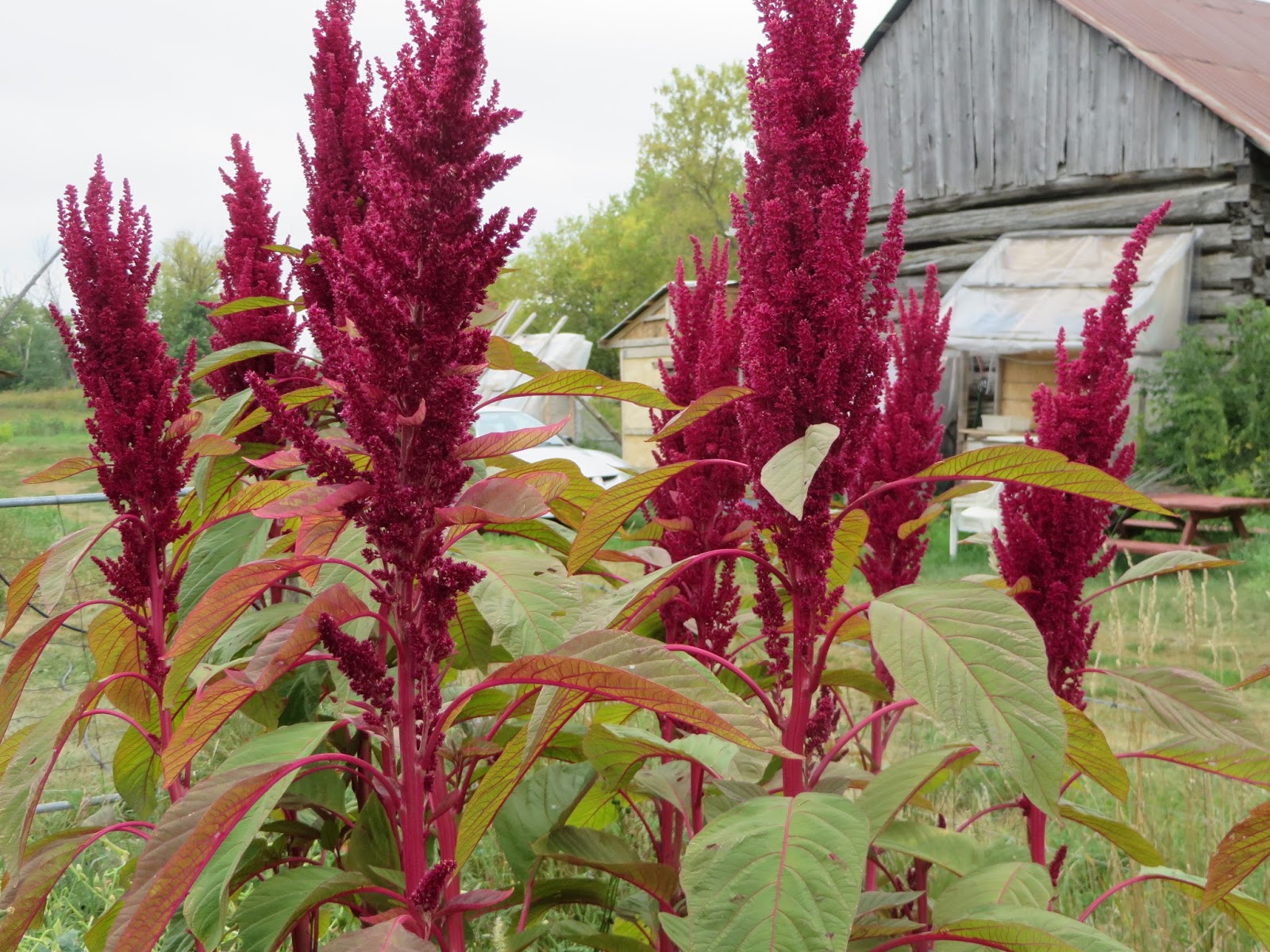


The Opoppeo flowers are ready for harvest.  There are only six large compound flowers to go around.

After these are cut, each plant will send out several side shoots of smaller flowers, which should generate enough cut flowers for everyone.

Opopeo flowers make great dried ornaments.

I always leave a couple of flower heads go to seed as the finches like their seeds.


The stalks are over four feet in height, so I can cut flowers to your desired length.  As long as they fit in the car.


Here is another flower that I have managed to grow in a corner of the field.  Leopard Flowers, or Blackberry lily.

Some Fleabane (white) has also gotten into this bed, but I thought the white and orange looked good together.

These plants have not been watered once since the spring, something to consider when planning a low maintenance garden...


I made several attempts to get this photo, but the subjects in question were not cooperative.

The assassin bug kept trying to drag away it's dinner...

...and the leaf miner kept trying to crawl away from the assassin bug.


The garlic is finished curing.  The hot, dry days of the past few weeks have helped this process along.

After they were harvested, the soil was gently brushed out of the roots and the bulbs hung to dry.  The roots are left on to allow the moisture to escape evenly.

I hang them out of direct sun (garlic can sunburn) and where the rodents are not likely to get at them (mice chew on everything even if they can't eat it).


Then the garlic is quickly graded by size and a final count is tallied.

Then the real inspection begins of the largest bulbs.

I select bulbs for seed based on size, number of cloves per bulb (eg, I prefer to select Fish Lake variety with four cloves as opposed to the typical three cloves).


Most importantly, I look for signs of ill-health or disease.

Cloves infected with a virus will produce plants that may spoil the following season.

Molds might kill the clove when it is sown; or it might render the plant less hardy as it grows the next season.

The lower bulb appears to have some mold on it's surface.  As long as it is kept in a dry storage, it will probably be fine well into the winter, the mold itself might even clear up.

But it is not suitable for planting.  The one on top looks perfect.


Still in the allium family.  These onions are nearing harvest date.  As the bulb matures, the leaves fall over and eventually brown off.

Looking closely at the leaves, you may be able to discern the whitish appearance indicating the presence of leek moth larvae.

I kept row covers on for much of the season.  Ideally, these can be taken off by day as the moths are nocturnal.  With the unusual amount of work this season, this was not possible, so in a better season, I can expect larger bulbs.
transplanting in clumps of four instead of five might also increase the bulb size, as these plants are very sensitive to shade.


Looks like my best onion harvest ever is on the way.  Onions require an even amount of moisture.  Too little and their tiny roots dry out, too much all at once and the plant begins to rot.  Another crop that has benefited from the hot dry summer.  My hope is that the dry conditions continue, to allow these to cure as nicely as the garlic - too much moisture and they  might go bad during the curing process.


Anticipating the next round of lettuce....the nursery has been too hot this season to get some decent germination rates.  If i had more time, I could use a bucket of cold well at an intake vent  to cool down the nursery.

The well water would need replacing regularly, and with so much extra work this season, simply was not something I could keep up with adequately.

On a per unit basis, lettuce is one of the big money makers for small mix produce farms.


Romano beans.  Deceptive, they appear to have no beans at all at first glance.

This one bed has turned more pods then two beds of green beans.

I am getting a lot of picking practice this season...


Kidney beans.  These are in their final stages of drying out.

I have grown two types this season.  Dark red kidney beans (which we had last season), and light red kidneys, which are very similar to the light pink we had three years ago.


Once most of the leaves have fallen off, the plants are harvested and hung up to continue drying.

After that, the weighing and shucking begins...


Blanching the celery with straw.


Delicata Squash.


 Ping Tung Eggplant.


Peas for fall.  Looks like my best pea germination for mid summer so far.


Potato plants turning yellow.  Ready for harvest.


Preparations for next year are already underway.

This is buckwheat.  It's long tap roots draw phosphorus up from deep in the soil.

Before frost, I run the wheel hoe through and turn the plants back into the soil, where they will decay and leave their nutrients near the surface, where short rooted plants such as cabbage can use the phosphorus nutrient.


Sunday, 31 July 2016


Another tough year, all the more disappointing as we were off to such a good start.  


Customers who have been with us for a couple of years would have noticed that the spring harvest was larger than usual - that is the standard I have been hoping to achieve since our third season.  The spinach in particular was off to a great start, with new varieties being trialed and some new knowledge to improve germinating and growing techniques.


At the end of May, the "event" upset the entire production plan, as I went into disaster mitigation and worked to build new beds for squash and potato crops.  

As these two crops are a significant part of our share value (not to mention the effort already put into these crops) and the fact that both are much anticipated by our customers, I had no choice but to begin the time consuming task of breaking new ground and building beds from scratch.  
A week later, I was able to return to the field and tried in vain to get back on track but the spring growth of weeds was well established and i soon found myself stuck in what I call "the weeding cycle".


As discussed elsewhere in this blog, the techniques I have been trained with eliminate most weeding for most of the season - I cultivate the beds instead on a weekly basis and can cover a lot of ground in a couple of hours.


So the result is a lot of time spent trying to keep our growing crops from being choked and missing some little details such as keeping the nursery temperature moderated with regularly replaced well water.  Not very satisfying for a detail oriented person such as myself. Nonetheless, I refuse to give up...


A very uninspiring picture to start the blog with. Three piles of compost.  This is the main ingredient I put into the soil to promote soil fertility, which in turn provides the crops with everything they need to produce our food.


Here is a photograph of three successions of green beans.  At the top of the picture are the beans we are just starting to deliver; these were planted in early June.

These will probably finish in about two weeks; the next round of beans should be ready by then.

The third round of beans is about two weeks old, and should be ready by early September.


At some point during these bean successions, our crop of romano  beans will also start producing pods. Probably fairly soon, judging by these first flowers.

The romano's are a new crop for Whitsend, a request by one of our customers from last year.

When trying new crops for the first time, I typically grow smaller quantities so that I can reduce the risk of a disappointing crop.  In this instance, I am growing one bed of romano's compared with the two maxi beans.


The red leaf crop is amaranth.  I started to experiment with this crop a couple of years ago while trying to find a dependable mid-summer crop that tolerates heat.


One of the most prolific crops i have ever worked with - zucchini's.

Last year's zuchini crop was disappointing. There were several factors, but one possibility was that the goldy zucchini variety was not as prolific as I had hoped.

As I hadd two other zucchini to try this year, I opted to use up the last of the goldy seed.

Next year, they well be replaced by a variety called Cocozelle.


Delicata squash are one of the most prized by chefs for its flavour.

Their rind is thin enough to eat, the plants are relatively trouble free, and fairly compact compared to many winter squashes,

Their only drawback is that they are not quite so long lasting in winter storage.


Potatoes in flower.  The flowers will produce a tomato like fruit full of seeds.  Meanwhile, the plant produces tubers as a second means of reproducing.


 The onions are in their final weeks of growth.  As the days start getting shorter, the plant takes this cue and starts to put more emphasis on growing bulbs for storing nutrients.

If left in the ground, the leaves would die back over the winter and remain dormant until spring.  Then, using the nutrients stored in the bulb, the plant would send up a flower stalk and eventually produce seed.


The fennel doesn't wait a season.  It stores it's nutrients in the bulb as well, but will develop it;s seed stalk in the same year it is planted.


The tomato plants desperately needing their second pruning.

This encourages more fruit set, as well as allowing sunlight to get to the fruits and hasten their ripening.


Red amaranth, white nicotiania, and yellow primrose.  The primrose and nicotiania  grew from seed left by the last year's flowers.  Several amaranth seeds also germinated on their own, but as the amaranth is slower growing,m I always start a few in the nursery to allow it a head start.

Otherwise, the nicitiania and primrose would choke the amaranth.


The finished product.  This edition of the blog (and the subject of this photograph) started as compost.

A typical early summer delivery, other than beans and peas showing up in the same delivery week.


Friday, 17 June 2016

Hello everyone.

Lots of progress over the past two weeks.  The days have been very long, and a few details have been missed.  Overall, the field is managing well.


The nursery is proving very difficult to keep cool enough to germinate lettuces.  We may notice as the season progresses that lettuce may become less available.  I will be looking to other crops to fill out the loss of leaves, but the options are limited.  More as this topic develops...


This is the second year of bringing these beds into production.  This season, I have planted the green beans, romano beans, and some of the potatoes here this season.

Potatoes and beans are great crops to use in newly developed beds as they are considered "cleaning crops".  The hilling action and heavy leaf cover prevents weeds from establishing.

I chose beans to fix nitrogen to allow the beds' fertility building process to start.


I planted potatoes are good scroungers for nutrients and will tolerate the weaker soil somewhat, though the tubers will not yield as heavily as they would in a richer bed.

The other beds in this section  are getting a cover of oats and a small amount of black peas; as these mature, they will be re-incorporated into the soil and replaced by a succession of buckwheat.

The buckwheat is very efficient at retrieving phosphorus from deep in the soil.  When the buckwheat starts to mature, I will cut it down and re-incorporate it into the soil to bring the phosphorus back up to the root zone for next years crops.


The potatoes are emerging.

The weeds in this picture are still young enough to disrupt with the hoe, though I will have to move quickly...

While the potato establishes itself, I'll cover it to prevent the potato beatles from getting at them.


These are my first attempt at romano beans, a crop requested last year by one of our customers.

They look good so far.

I have no idea what to expect from new crops so I prefer to plant a small quantity to "trial".


Next year, leaf crops will replace the beans and cabbage or root crops will follow the potatoes.  The beans and potatoes will be planted where the oat/pea/buckwheat cover crops are growing this year.

Crops planted to develop fertility are referred to as "green manure".

This fall, I'll scrape away many of the weeds on the paths and sow rye and clover.


Covering the paths is a great way to suppress the weeds, grow a source of plant material for the compost, and prevent soil erosion.


This is what the end result of all this work will look like in another year or two, depending on how well the paths establish.

Here you see the clover path with it's white flowers, as well as a few seed heads of the rye.

And blemish free kale.


Nitrogen fixed by clover in the path and peas in the bed.  The will soon be a great bed for leaf crops.

The peas will be done by early July.  At that time, the pea plants will be removed and sent to the compost.

The few weeds that have evaded my hoe will get cleaned out, last year's compost applied and worked into the soil.

This activity will bring some of the weed seed bank up to the surface where they can germinate.


I'll pass the hoe through once a week to disturb the freshly sprouted weeds.  After three passes, most of the seed bank will be exhausted, and then I can plant a fall leaf crop.


Fertility building continues after the bed and path are established.  After my third pass with the hoe, leaf beds receive a top dressing of compost.

Ideally, I apply the compost just before some predicted rain, but in this case I turn on the irrigation tape.

After the soil is thoroughly moist, I work the compost into the surface.

Most food crops have relatively shallow root systems, so keeping the compost near the surface ensures that the plants can easily retrieve their nutrients.


Over the course of the year, and through next springs melt, the remaining nutrients will leach deeper into the soil.  That is one of the reasons why I plant the deeper rooted fruit plants the year after the leaf crops.


Celtuce, or Chinese lettuce, has edible leaves and stalk..  I trialed celtuce for the first time last year and grew some very leafy plants, but the stalk was thin.

Suspecting that the vigorous leaf growth was a result of placing celtuce in leaf beds, this year I planted it at the base of the tomato and zucchini (fruit crops).

It appears that my hunch may have been correct.  The celtuce planted in a fruit bed looks like it is growing a thicker stalk.

Another week or two and we'll know for sure.

However, I am wondering why the stalks are so short, I was expecting a little longer.  


No shortage of things to learn.


Flea bane, one weed that I tolerate and promote in the growing field.  There were two plants in the field that i was aware of last year.  I made a point of avoiding them while mowing pats last year, now there are several plants out there.

This herb was once used as a strew on earthen floors to drive off fleas, so I suspect they would work equally well in a stable or hutch.


I had three primrose plants in the lower left portion of the rock garden last year.  It has established so well that the Nicotiana has been pushed back among the red opopeos.  Opopeo is very tall, ans so will rise up above the white nicotiana when it finally grows.

Planning a perennial garden requires looking into the future and trying to predict how they will look.


Annual flowers.  If you are a beginner with growing flowers, i would suggest zinnia's.

They have been reliable producers for me each of the three year's I have grown them.

If I can do it, anyone can...

"You can judge a field by it's cover"


Wednesday, 15 June 2016

Hello Everyone:

I anticipate a number of visits to the website over the next few days, and so will take this opportunity to make a few thoughts known.

Herbicide.  I hear a lot of argument from both sides and very little genuine debate, which I find tiresome and not constructive.  I have a studied opinion on this topic which has changed back and forth over the years.

Wild Parsnip.  I believe this weed has to be controlled (I don’t believe it’s possible to eliminate it completely), but I also think there may be means which have more long term local economic benefits than spraying.  Other jurisdictions have done this successfully from what I have heard. 

City communications regarding the parsnip control program.  Some say the cities messaging is ambiguous, others say it is clear.  I think this alone illustrates it is not a clear message.

The wild parsnip eradication program is a hot button minefield.

It touches upon the herbicide vs. anti herbicide debate, the wild parsnip eradication vs. promoting wildlife debates, organic vs. conventional farming, freedom to work ones own property vs. responsibility for the property rights of ones neighbors. 

With so much potential for controversy, I think the city should be absolutely clear with its messaging. 

 I applaud the city for trying to save a small amount of money by reusing an old flyer for a program that has evolved, but in this instance, I believe greater care is required.

I hope the city has learned from this and we can move on.

The best thing we can all do for now is pray for a bit more rain.


Bob Whitmore


I'll be taking this note down in the next couple of days.  It is not what i want to focus on.